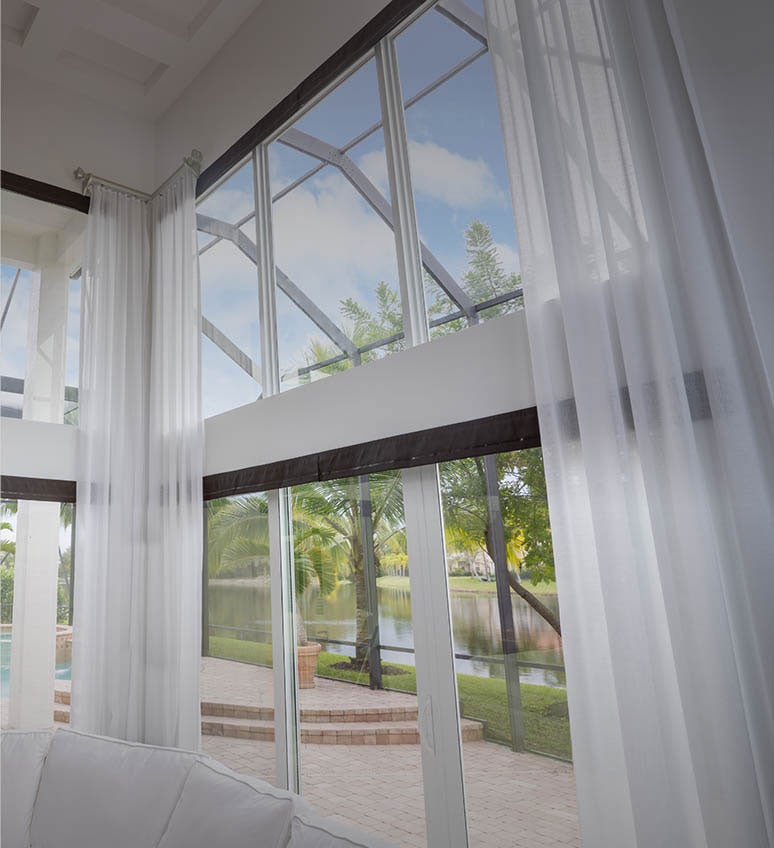
Florida puts unusual stress on a home. The heat is relentless for much of the year, the humidity rarely lets up, and hurricane season hangs over every summer. Building or remodeling well here means choosing materials that hold up under those conditions while keeping energy use in check. Sustainable building is not just about being kind to the environment. In this climate, it is also the most practical path to a comfortable, durable, lower-cost home. Few choices matter more to that goal than the windows and doors you install, because they are where heat, moisture, and storm forces hit the building hardest.
Why the building envelope decides everything
The building envelope is the shell that separates your conditioned indoor air from the heat outside: roof, walls, windows, and doors. In a hot climate, the envelope's main job is to resist heat transfer. Heat moves into a home through conduction, convection, and radiation, and ordinary single-pane glass lets solar radiation pour straight through. The result is an air conditioner that runs almost constantly, which drives up your power bill and shortens the life of the equipment.
Two ratings tell you how a window or door will perform here. The Solar Heat Gain Coefficient (SHGC) measures how much of the sun's heat the product blocks, and the U-factor measures how well it insulates against heat transfer. For Florida homes, you want a low SHGC and a low U-factor. Together they keep the interior cool without leaning so heavily on mechanical cooling. Upgrading the envelope with products built to hit those numbers is the single most effective move most homeowners can make.
What makes a window energy-efficient
Modern glass is far more than a clear pane. A few proven technologies do most of the work:
- Low-E coatings. A microscopically thin metallic layer reflects long-wave infrared heat back outside while letting visible light through. During a Florida summer, that keeps a large share of the sun's heat out of your living space.
- Double or triple panes with inert gas. Filling the space between panes with argon or krypton, both denser than air, slows heat transfer far better than a plain air gap.
- Warm-edge spacers and thermally broken frames. These stop heat from sneaking through the edges and frame, where cheaper windows quietly lose their efficiency.
Replacing aging windows with assemblies that combine these features is a foundation of sustainable remodeling. Lower energy use at home means fewer fossil fuels burned at the power plant, so the benefit reaches well beyond your own utility bill. You can compare the styles and glass options on our windows page.
Choosing styles that work with the climate
Different window styles serve different jobs. Matching the style to the room improves both comfort and efficiency.
For natural ventilation during the milder months, operable windows let you cool the house without the air conditioner. Single-hung windows open from the bottom and seal tightly when closed. Double-hung windows move at the top and bottom, creating a convection loop that draws cool air in low and pushes warm air out high. Casement windows hinge at the side and swing outward to catch passing breezes, while sliding windows suit wide openings and adjust easily without using up space.
For daylight without heat loss, fixed windows shine. Picture windows are sealed panes that do not open, so they leak almost no air while filling a room with light and cutting your need for daytime lighting. Custom architectural shapes placed high on a wall or in a vaulted ceiling bring in light while keeping privacy and efficiency intact.
Doors are part of the envelope too
Exterior doors are large openings, and a poor one undermines the whole envelope. Hollow metal and untreated wood doors insulate badly and tend to warp, rot, and leak air in Florida's humidity. Better options use materials built for the conditions.
Fiberglass and insulated steel entry doors with polyurethane foam cores insulate far better than solid wood and resist the swelling and shrinking that breaks a weather seal. For patios and lanais, French doors can carry the same Low-E, argon-filled glass found in efficient windows, and multi-point locks pull the door tight against the frame. Sliding patio doors now come with heavy-duty weatherstripping, thermal breaks, and smooth rollers that hold a firm thermal seal while staying easy to operate. Our doors page covers the full range.
Where hurricane protection and sustainability meet
On the coast, durability and sustainability are the same conversation. A material that survives a storm is a material you are not throwing away and replacing. That is why impact windows and doors fit a sustainable home so well.
Impact-resistant products use laminated glass: two panes bonded around a tough plastic interlayer. If flying debris strikes the glass, it may crack but stays held to the interlayer, so the envelope is not breached. Keeping the envelope sealed during a storm is critical, since a breach can pressurize the house from the inside and lift the roof.
The sustainability gains are real and add up over time:
- No more disposable shutters. Impact products remove the yearly cycle of buying, hanging, and tossing plywood, which sends a steady stream of material to the landfill.
- UV protection. Laminated glass blocks the large majority of harmful UV rays, slowing the fading of floors, furniture, and artwork so those items last longer.
- Built to last decades. The strong frames and thick glass required to meet Florida code also insulate and dampen sound, and because they hold up for years, they add little to construction waste over a home's life.
A window strong enough to outlast a hurricane is also a window you replace far less often, and the most sustainable product is usually the one you do not have to buy twice.
The payback, in dollars and in impact
High-performance windows and doors carry a higher price than basic materials, but the return tends to be strong. Lower solar heat gain means a smaller cooling load, which trims monthly utility bills and eases the strain on your air conditioner so it lasts longer. Many homeowners also see reduced insurance premiums thanks to the added storm protection, along with a bump in property value. Financing options make the upfront cost manageable, so a sustainable upgrade does not have to wait for a windfall.
Look for the ENERGY STAR label as a quick way to confirm a product meets recognized efficiency standards for the region. Across many homes, this kind of upgrade lowers aggregate demand on the power grid, which means fewer fossil fuels burned and cleaner local air.
Installation makes or breaks the result
Even the best-rated glass will fail to save energy if it is fitted poorly. Gaps around the frame let air and water slip past, undoing the efficiency you paid for. Sustainable building depends on accurate measurement, secure anchoring to the structure, and a sealed perimeter with quality flashing and caulk. Done right, this keeps moisture out and prevents the mold and rot that hurt both indoor air quality and the home itself. This is exactly why professional installation matters as much as the product you choose.
If you are planning a remodel or building new, the right windows and doors will keep your Florida home cooler, quieter, and ready for storm season for years to come. We would be glad to walk you through the options and put together a plan that fits your home and budget. Contact us for a free quote and we will help you take the next step.