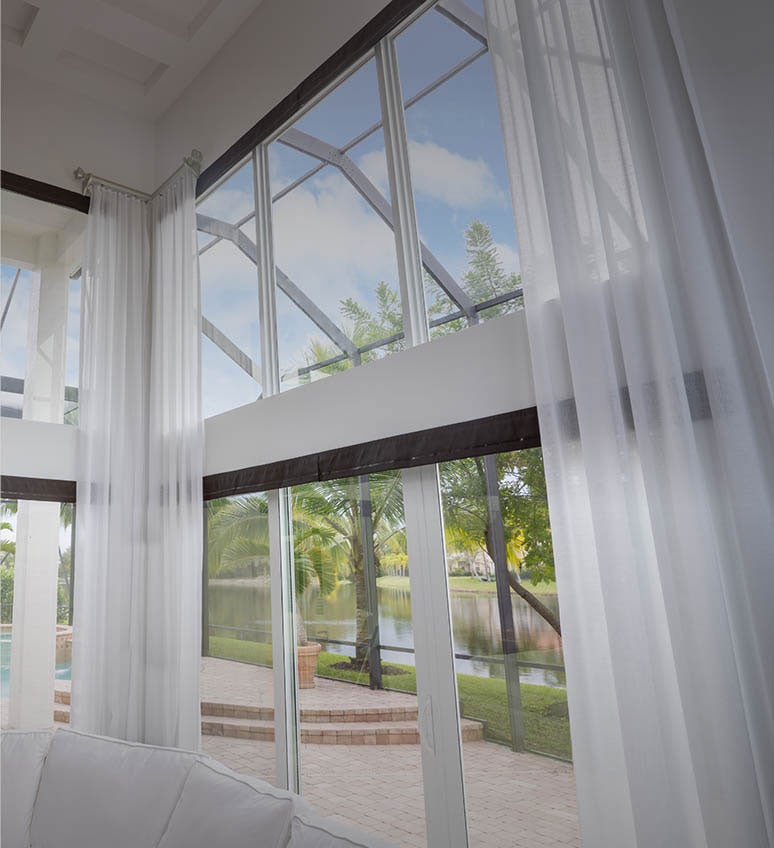
If you own a home in Florida, hurricane season is a recurring fact of life, not a rare event. High winds and flying debris put steady pressure on the weakest points of any house, and those weak points are almost always the windows and doors. So the question many Florida homeowners ask is a practical one: do I actually need impact windows, or are there other ways to stay code compliant and protected? The short answer is that it depends on where you live, what your insurance requires, and how much hands-on storm prep you want to do. Here is what you should know.
Florida Building Code and wind-borne debris regions
After the destruction caused by Hurricane Andrew in 1992, Florida adopted some of the strictest construction standards in the country. The Florida Building Code sets specific rules for how exterior openings must resist wind, and it pays close attention to windows and doors because they are the first things a storm tries to break.
Much of coastal and southern Florida is mapped into Wind-Borne Debris Regions, where any glass facing the outside has to be protected against flying objects. Miami-Dade and Broward counties go a step further under the High-Velocity Hurricane Zone classification. In an HVHZ, windows and doors must pass demanding lab tests, including large-missile and small-missile impact tests plus repeated cyclical pressure cycling that mimics a hurricane.
This matters for one practical reason: if you replace windows in one of these zones, the law requires you to install tested impact-resistant products or a specific code-approved shutter system. So the first thing to find out is which zone your address falls under. That single detail decides whether impact protection is a choice or a requirement.
How impact glass actually works
Standard residential glass is rigid and shatters into sharp pieces when something hits it hard. The bigger problem is what happens next. Once a window blows out during a storm, wind rushes inside and raises the internal pressure of the house. That trapped pressure pushes up on the roof and out on the walls, which is how many homes come apart in a hurricane.
Impact glass is built to stop that chain reaction. It uses a laminated design: two panes of tempered or heat-strengthened glass bonded to a tough plastic interlayer, usually Polyvinyl Butyral (PVB) or an ionoplast layer. When a flying object strikes the window, the outer pane may crack, but the interlayer holds the fragments together inside the frame. The glass stays in place, the opening stays sealed, and the house keeps its protective shell. When you compare products, look for the Design Pressure (DP) rating and the ASTM impact test approvals, since those numbers tell you what a window was actually tested to handle.
Impact windows versus shutters and panels
The Florida Building Code does allow alternatives such as accordion shutters, storm panels, or plywood over openings. The real difference comes down to active versus passive protection.
- Shutters and panels require you to be home, healthy, and ready before every storm. Someone has to put up panels across every opening, which takes time, hardware, and physical effort.
- Impact windows are always working. The protection is built into the wall, so there is nothing to deploy, no panels to store, and no last-minute scramble when a storm is named.
Impact glass also lets daylight in during a power outage, while solid shutters leave the inside of the home dark. For many families, that day-to-day convenience is reason enough to choose permanent impact windows over shutters.
What impact windows do for your wallet
The upfront cost of impact products is real, but it tends to come back to you over time. Florida insurers are required by state law to offer wind-mitigation discounts to homeowners who protect their openings. To qualify for the full credit, every exterior opening, including windows, doors, and skylights, generally needs code-approved impact protection. A wind-mitigation inspection documents what you have so your insurer can apply the savings.
There is an energy side too. Many impact windows include Low-E coatings and argon gas between the panes, which cut down solar heat gain. In the Florida climate that means your air conditioner runs less, and some products carry ENERGY STAR certification for the region. Lower cooling bills, year after year, help offset the original investment.
Choosing styles that still fit your home
Meeting strict code does not mean settling for ugly windows. Impact products come in the same styles you already know. Single-hung and double-hung windows give you the classic look while hiding heavy-duty locks. Casement windows crank open on a side hinge for full ventilation and a clean view. Sliding windows move smoothly side to side, and picture windows hold a large, fixed pane for maximum light. Unusual openings, such as arched or circular shapes, can be custom built to match while staying fully code compliant.
Do not forget the doors
Reinforcing windows alone leaves a gap if your doors can still fail. Impact-rated doors use the same laminated glass and reinforced framing as the windows, so the whole building shell defends at one level. Entry doors come in fiberglass or metal that resists bowing under wind load. Sliding patio doors use deep tracks and multi-point locks so panels cannot be forced from their frames, and impact-rated French doors use reinforced hinges and astragals to stay sealed against hurricane winds. If you are protecting the house, the exterior doors belong in the plan from the start.
Installation is what makes it work
Even a top-rated HVHZ window will fail if it is anchored poorly. The protection depends on correct fastener spacing, the right structural sealants, and an installer who understands whether the wall is concrete block, masonry, or wood frame. This is precise work, and it is tied to permitting and inspection. Hiring a licensed contractor who knows local code, pulls the proper permits, and passes inspections is the difference between a window that performs as tested and one that does not.
So, do you need impact windows?
If your home sits in an HVHZ or a wind-borne debris region and you are replacing windows, the code likely requires impact protection or an approved shutter system. Even where it is optional, impact windows offer passive defense, insurance savings, lower energy bills, and quieter, more secure everyday living. For most Florida homeowners, that combination makes them worth a serious look.
If you are not sure which zone you are in or what your home needs, the team at Aaron Windows can walk your property, explain your options, and put together a plan that meets Florida Building Code. Reach out for a free quote and find out exactly what it would take to protect your home before the next storm.